Bad Behavior Or Sign Of Pain? Horses Are Trying To Tell Us

by


Any time a horse expresses resistance or undesirable behavior, it’s worthwhile to investigate why—it’s not always a training issue he’s simply refusing to do; the horse may be in pain. Horses have no ulterior motive; they simply seek relief from discomfort. Identifying the root cause of the discomfort the horse is trying to get away from can be challenging, yet is necessary to resolve the issue.

A horse that swishes his tail, pins his ears or acts angry when girthed is trying to tell the rider something; if not addressed while small expressions, the outbursts may ramp up to bucking, rearing, bolting or otherwise attempting to avoid pain.

Read Paulick Report Article

April Showers Bring May Flowers…And Rain Rot, Dew Poisoning and Abscesses

By Jen Roytz

They say April showers bring May flowers, but that’s not the only thing they bring. Rain rot, dew poisoning and abscesses are some of the less enjoyable products of spring’s rainy days and muddy pastures. While some horses seem to simply be more prone to wet weather-related ailments than others, there are a number of things horsemen can do to minimize the severity of ailments such as rain rot, or avoid them all together.

Though often mistaken as a fungal disease, rain rot (or rain scald) is a common bacterial infection of the skin (also known as Dermatophilosis). Dermatophilus congolensis, the bacteria that causes the infection, lives dormant in the outer layer of the skin. When the skin is exposed to prolonged moisture (high humidity, rain, sweat), the bacteria infects the compromised skin, resulting in crusty, puss-filled scabs between the living and dead layer of skin.

To Read TDN Article

Sister Peacock First Stakes Winner for Louisiana Based Real Solution

Daughter of Real Solution was her sire’s first stakes winner April 21 at Woodbine.

Sister Peacock and jockey Jesse Campbell led gate-to-wire in the $100,000 Star Shoot Stakes for 3-year-old fillies at Woodbine April 21, boosting her record to three wins from five starts. Her only two losses were both runner-up finishes. Owned by Brent and Russell McLellan and trainer Stuart Simon, the Kentucky-bred daughter of Real Solution  was a 1 1/4-length winner in the six-furlong feature, giving her sire his first stakes winner.

Sister Peacock set fractions of :22.97 and :45.99 then kept her closest pursuer, Missmizz, at bay en route to victory in 1:09.53. Power Galfinished third off a ground-saving trip and Intanga Rose was fourth, edging out Si Si Tequila, who challenged three-wide turning for home before drifting out in the stretch.

Read Blood Horse Article

More than $1 Million in Funding Approved for Equine Research by Grayson-Jockey Club Board

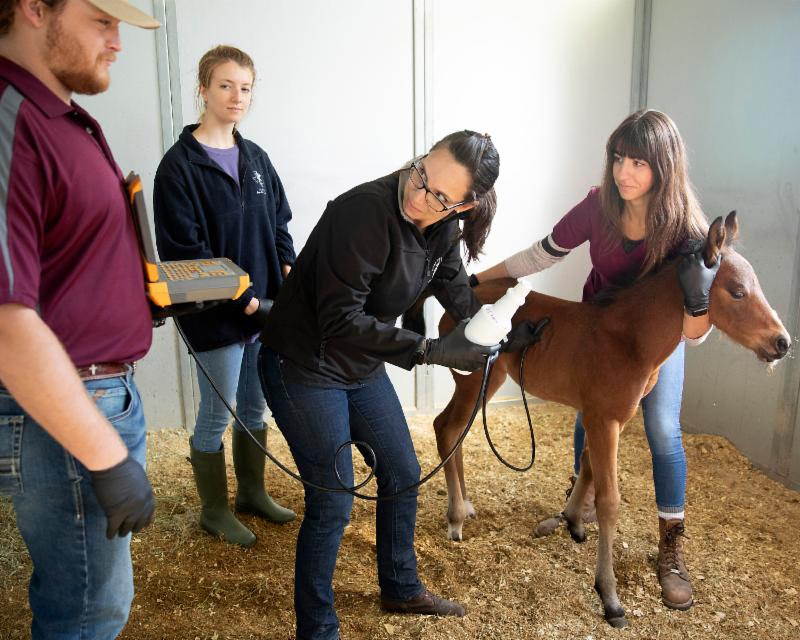
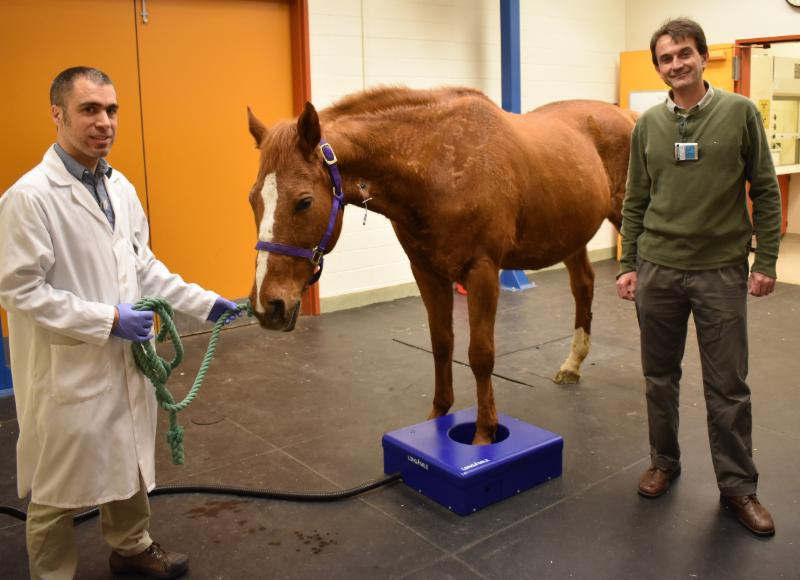
New York, NY – April 22, 2019 – The board of directors of Grayson-Jockey Club Research Foundation announced that it has authorized expenditure of $1,338,858 to fund eight new projects at seven universities, nine continuing projects, and three career development awards to fund veterinary research to benefit all horses. This is the fifth straight year that more than $1 million has been approved.

“We thank our generous donors who recognize the value of veterinary research for enhancing equine health and wellness,” said Jamie Haydon, president of the foundation. “From studying a racehorse’s stride to predict injury, to testing an intrauterine antibiotic treatment, we are excited to see the results of these studies and how they may help horses of all breeds in the future.”

The 2019 slate of research brings Grayson-Jockey Club Research Foundation’s totals since 1983 to more than $27.5 million to underwrite 366 projects at 44 universities.

“Grayson’s goal has always been to support the most relevant and impactful research on behalf of the horse, and the past year has seen an increased focus on the musculoskeletal system of the racehorse,” said Dr. Larry Bramlage, partner, Rood & Riddle Equine Hospital and a member of Grayson’s Research Advisory Committee. “We are very happy to have three quality musculoskeletal projects focused on better understanding why injuries occur and how to detect and prevent them before they manifest themselves as injuries to the bones and joints of the racehorse.”

Additionally, Oaklawn Park and WinStar Farm will each be donating $50,000 in 2019 to sponsor research projects pertaining to health in racehorses. They are participants in Grayson’s new corporate membership program, whereby organizations can contribute to Grayson-funded projects. Those interested in the program should contact the foundation.

The new projects are listed alphabetically by university below:

Antimicrobial Properties of Equine MSCs 
Laurie Goodrich, Colorado State University
This study is expected to impact the equine industry by validating TLR activated equine mesenchymal stem cells as an effective, novel therapy in treating multi-drug resistant infections.

Uncovering the Blood B Cell Immune Response to EHV-1 
Tracy Stokol, Cornell University
By sequencing individual blood B cells, this research will identify changes in B cell immunity after EHV-1 vaccination and will generate a sequencing database that will uncover new antibodies against EHV-1.

Intrauterine Antibiotics may Augment Placentitis Therapy
Scott Bailey, North Carolina State University
This proposal will explore the potential for intrauterine antibiotic treatment to improve foal survival and health in mares with ascending placentitis.

Non-Invasive Evaluation of Host-Microbiota Interactions 
Canaan Whitfield-Cargile, Texas A&M
This study aims to develop a non-invasive platform to serve as a diagnostic test for gastrointestinal inflammation prior to severe disease and to reveal how bacteria in the gut influence horse health.

Standing PET of the Racehorse Fetlock 
Mathieu Spriet, University of California-Davis
This research involves validation of a PET technology for early detection of fetlock lesions in standing horses to prevent catastrophic breakdowns in racehorses.

Training Programs for Prevention of Fetlock Injury
Sue Stover, University of California-Davis
This study is designed to predict proximal sesamoid bone fracture in racehorses from a calibrated computational model that incorporates training programs, track surface properties, and bone’s reparative processes.

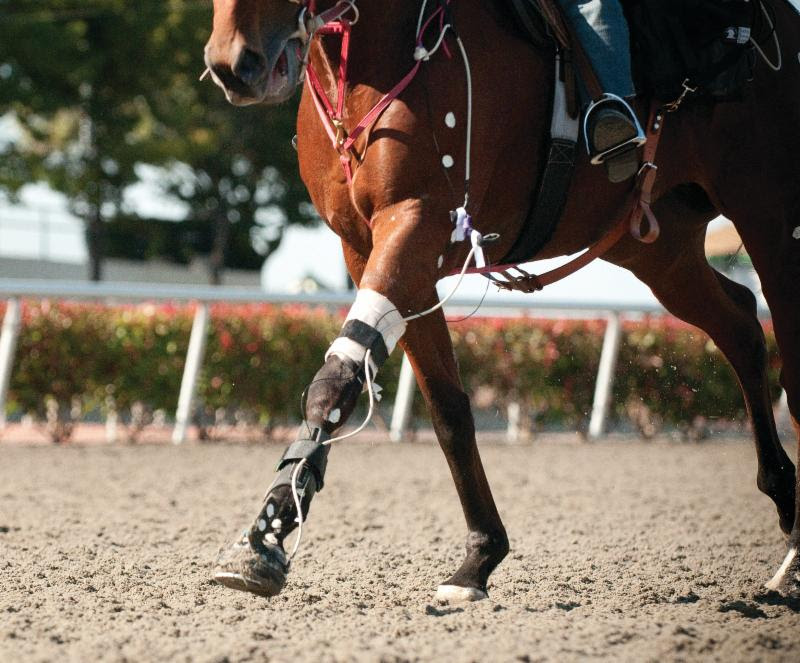
Racehorse Stride Characteristics, Injury and Performance
Chris Whitton, University of Melbourne
By identifying changes in stride characteristics of racehorses over time, researchers can identify those parameters that can be used as an early indicator of injury or that are key to injury development.
*Sponsored by WinStar Farm*

Robotic CT for Assessing of Bone Morphology
Kyla Ortved, University of Pennsylvania
This study strives to prevent catastrophic injuries in the Thoroughbred racehorse by screening fetlock joints using standing robotic CT and biomarker analysis.
*Sponsored by Oaklawn Park*

Kline Award Recipient

Sian Durward-Akhurst, University of Minnesota
Dr. Akhurt’s project looks at using whole genome sequencing (WGS) to create a catalog of genetic variation in the horse and quantify the number of variants predicted to have a detrimental effect on phenotype. Understanding of the genetic burden in the diverse population of the equine will help in diagnosing, determining prevalence, and lead to ways of dealing with mutation-caused diseases.

Storm Cat Award Recipients

Lynn Pezzanite, Colorado State University
Dr. Pezzanite’s project looks at the possible benefits of combining mesenchymal stem cells, known to secrete antimicrobial peptides, into traditional antibiotic therapy for control of joint infections.  If successful, this improves outcomes and reduces reliance on antibiotics to which infections are becoming increasingly resistant.

Holly Stewart, Colorado State University
Bone marrow lesions are known to be early indicators of structural deterioration of the fetlock joint.  Dr Stewart’s project looks to develop a dual energy cone beam CT scan of this area of maladaptive changes with the advantages of reduced scan times, reduced cost, and improved spatial resolution compared to conventional MRI.

Details on the new projects are available here.

Grayson-Jockey Club Research Foundation is traditionally the nation’s leading source of equine research funding. The projects it supports enhance the health and safety of horses of all breeds. Additional information about the foundation is available at grayson.jockeyclub.org.

STAY CONNECTED WITH GRAYSON-JOCKEY CLUB RESEARCH FOUNDATION:
Like us on Facebook
Follow us on Twitter
View on Instagram

Industry Reaction To Racetrack Coalition’s Proposed Partial Phase-Out Of Lasix

by


Reaction was mixed to the announcement on Thursday by a coalition of U.S. racetracks to partially phase out race-day administration of the anti-bleeding diuretic furosemide (Lasix), beginning with 2-year-olds racing in 2020 and in stakes races beginning in 2021.

Those supporting the initiative include all tracks owned or operated by Churchill Downs Incorporated (CDI), the New York Racing Association, Inc. (NYRA) and The Stronach Group as well as Del Mar, Keeneland, Lone Star Park and Remington Park, Los Alamitos Racecourse (Thoroughbreds), Oaklawn Park and Tampa Bay Downs. Breeders’ Cup Limited, the Thoroughbred Owners and Breeders’ Association (TOBA) and its American Graded Stakes Committee and the Kentucky Thoroughbred Association also signed on in support of the proposal.


To Read Paulick Report Article

EVANGELINE DOWNS CANCELED FRIDAY AND SATURDAY PROGRAMS DUE TO TECHNICAL ISSUES CAUSED BY WEATHER

RACING SCHEDULED TO RESUME WEDNESDAY, APRIL 24


OPELOUSAS, LA – Evangeline Downs Racetrack canceled the live racing programs for Friday, April 19 and Saturday, April 20, as a result of a technical issue with the track’s electrical system caused by the severe heavy rain which fell in the Opelousas area on Thursday afternoon.

Evangeline Downs was forced to cancel Thursday’s racing program after four races were run due to the same issue, which caused several banks of the track’s lighting system to not function properly.

Live racing at Evangeline Downs is scheduled to resume on Wednesday, April 24 with a nine-race program. Post time on Wednesday will be 5:50 pm Central Time.

Evangeline Downs is currently in the midst of the 2019 Thoroughbred season, which will continue on a Wednesday through Saturday schedule through Saturday, August 24.


For more information on the Thoroughbred season at Evangeline Downs, visit the track’s website at www.evdracing.com. Evangeline Downs’ Twitter handle is @EVDRacing and the racetrack is also accessible on Facebook at www.facebook.com/EvangelineDownsRacing.


About Evangeline Downs

Evangeline Downs Racetrack Casino & Hotel is owned by Boyd Gaming Corporation, a leading diversified owner and operator of 22 gaming entertainment properties located in Nevada, New Jersey, Illinois, Indiana, Iowa, Kansas, Louisiana and Mississippi.  Boyd Gaming press releases are available at www.prnewswire.com.  Additional news and information can be found at www.boydgaming.com, or www.evangelinedowns.com.

LTBA Main Office Closing at 2:30 p.m. Today, Thurs. April 18

The Louisiana Thoroughbred Breeders Association is closing their main office at New Orleans Fair Grounds today, Thursday, April 18, 2019 at 2:30 p.m. due to  the approaching storm front. We apologize for any inconvenience.

The office will be closed tomorrow as well for the Good Friday holiday. LTBA will return to regular office hours, Monday, April 22, 8:00 a.m.- 4:00 p.m.

Racetrack Coalition Moves Toward Lasix Ban in Stakes

Fair Grounds among Twenty Racetracks Committed to Ending Race-day Lasix in stakes in 2021.


A coalition of leading Thoroughbred racing associations and organizations announced April 18 a new initiative committed to phasing out the use of the medication furosemide (Salix, commonly called Lasix) beginning in 2020 and eliminating the use of Lasix in stakes races at their tracks beginning in 2021.

Coalition racetracks that have signed on to this initiative include all tracks owned or operated by Churchill Downs Inc., the New York Racing Association and The Stronach Group as well as Del Mar, Keeneland, Lone Star Park, Remington Park, Los Alamitos Racecourse (Thoroughbred meets), Oaklawn Park, and Tampa Bay Downs. Taken together these tracks represent 86% of the stakes races assigned graded or listed status in the United States in 2018. The coalition tracks will work diligently with their respective horsemen’s associations and racing commissions toward implementing this effort.

To Read BloodHorse Article

$100,000 grant from NTRA Charities to establish new UK Equine Surfaces and Safety Laboratory

By Holly Wiemers

LEXINGTON, Ky., (April 17, 2019) – A gift of $100,000 announced today by the National Thoroughbred Racing Association Charities will enable the University of Kentucky to further support equine surfaces and safety research under the direction of Mick Peterson, director of UK Ag Equine Programs.

Funds will be used to renovate existing space within the College of Agriculture, Food and Environment to create the NTRA Charities Equine Surfaces and Safety Laboratory. The investment will allow UK to make a meaningful impact on the sport of horse racing through surface and safety research conducted by Peterson, a nationally known expert in surface safety and faculty member in the UK Department of Biosystems and Agricultural Engineering.

“NTRA Charities is excited to support UK’s new Equine Surfaces and Safety Research Laboratory, which through its important work will absolutely lead to a safer racing environment for our human and equine athletes,” said NTRA President and CEO Alex Waldrop. “This presents a unique opportunity to achieve significant advancements in the science of creating and maintaining safer racetrack surfaces. This lab will also help us train the next generation of track maintenance personnel to analyze the wealth of data that will soon be available to keep racing surfaces as safe as possible.”

In 2016, UK acted upon the recognized need to expand its research capabilities in the area of safety and recruited Peterson as a faculty member and director of UK Ag Equine Programs. Peterson joined the team, relocating the Racing Surfaces Testing Laboratory (RSTL) to Kentucky, and he continues to improve the safety of horse and rider in horse racing and sport horse endeavors.

“NTRA has reviewed variations on this proposal for nearly two years and we are very pleased to see it go forward. The job does not end here. We anticipate continued calls on the industry to fund specific surfaces research projects undertaken in this new laboratory,” said Steve Koch, executive director, NTRA Safety and Integrity Alliance.

“The UK College of Agriculture, Food and Environment is committed to our signature equine industry in all ways. In particular, we are dedicated to all aspects of safety in our sport,” said Dean Nancy Cox. “This gift allows us to do important research to assist Thoroughbred racing and to create a pipeline of experts to serve racetrack safety.”

Under the direction of Peterson, RSTL has been particularly effective at reinforcing the welfare and safety commitment through its central testing laboratory for dirt, turf and synthetic racing surface materials. To date, testing has included more than 70 different racing and training tracks around the world. Equipment development from the lab includes riding crop design assessment, testing maintenance equipment and performance tests of starting gate and rail padding. The RSTL materials laboratory inspired efforts by the Fédération Équestre Internationale (FEI) that have now expanded activities to arena surfaces testing, including large scale sample analysis that is available only in Sweden.

“This laboratory will allow us to do racetrack surfaces testing on a larger scale to permit us to replicate surface properties using maintenance equipment on the surfaces, which have been observed on racetracks but are not well understood. Understanding racetrack maintenance is key to providing a consistent racing surface regardless of the weather,” Peterson said.

The laboratory will work to solve today’s problems associated with surface and safety research. Projects which are currently funded but have previously been space constrained include:

  • The development of real-time moisture sensors for racing surfaces
  • Shoeing effects on swing phase joint loading
  • Real-time sensing of gait parameters
  • Subsurface design of racetracks
  • The effect of harrowing on the formation of the racetrack hardpan
  • New tools for the measurement of cushion depth on dirt racetracks and moisture and penetration resistance on turf tracks

The laboratory has the potential to offer substantial new areas for industry development, including:

  • The effect of a harrowed racing surface on optimal helmet design
  • The potential for new horseshoe designs to reduce loading rate for arteriosclerosis risk reduction
  • The development of new sensors for fan engagement and handicapping data using ‘internet of things’ technologies

Additionally, the expanded laboratory would provide space for undergraduate and graduate students to learn from and participate in innovative research and for important entities within the industry, such as track superintendents, to advance their knowledge and skills in a hands‐on setting.

Renovation is expected to begin by summer with space beginning to be used for research within a few months.

Writer: Holly Wiemers, 859-257-2226

UK College of Agriculture, Food and Environment through its land-grant mission, reaches across the commonwealth with teaching, research and extension to enhance the lives of Kentuckians.

About NTRA Charities

Formed in 1999, NTRA Charities is a non-profit 501 (c)(3) public charity whose mission is to promote and support charities in or related to the Thoroughbred industry. Contributions to NTRA Charities are tax deductible.

About the NTRA Safety & Integrity Alliance

The NTRA Safety & Integrity Alliance establishes and implements standards promoting safety and integrity in horseracing. Corporate partners of the Alliance include Insurance Office of America and Hagyard Equine Medical Institute. Information on the Alliance, including the Alliance Code of Standards, can be found at NTRAalliance.com.

About the NTRA

The NTRA, based in Lexington, Ky., is a broad-based coalition of more than 100 horse racing interests and thousands of individual stakeholders consisting of horseplayers, racetrack operators, owners, breeders, trainers and affiliated horse racing associations, charged with increasing the popularity, welfare and integrity of Thoroughbred racing through consensus-based leadership, legislative advocacy, safety and integrity initiatives, fan engagement and corporate partner development. The NTRA owns and manages the NTRA Safety and Integrity Alliance; NTRA.com; the Eclipse Awards; the National Horseplayers Championship; NTRA Advantage, a corporate partner sales and sponsorship program; and Horse PAC®, a federal political action committee. NTRA press releases appear on NTRA.com, Twitter (@ntra) and Facebook (facebook.com/1NTRA).

OBS Spring Sale Under Tack schedule altered due to weather forecast

The Under Tack schedule for Ocala Breeders’ Sales Company’s 2019 Spring Sale of Two Year Olds in Training has been changed due to a forecast of heavy rain on Friday and high winds on both Friday and Saturday.

The Friday and Saturday Under Tack sessions are cancelled. On Thursday, Hip No.’s 609-912, selling on the sale’s third day, April 25th, will breeze. On Sunday Hip No.’s 913-1221, selling on the sale’s final day, April 26th, will now breeze.

The Thursday and Sunday sessions will begin at 8:00 a.m.

The revised schedules are posted in the OBS website.

Tuesday’s first sale session will begin at 12 noon to provide buyers additional time for inspection.

For more information regarding the Spring Sale or OBS website, please call (352) 237-2154.